Angels
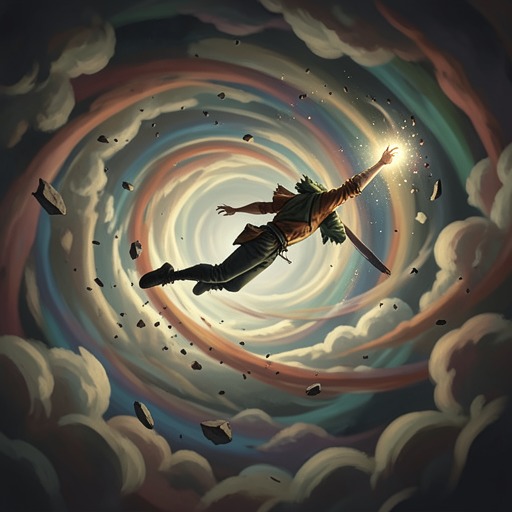
Paradise LostAngels are the vast order of immortal spirits through whom the poem gives visible form to Heaven's hierarchy, worship, warfare, judgment, and creative power. They appear as the innumerable progeny of light gathered around God and the Son, but their freedom is morally decisive: the same celestial order contains faithful ministers such as Abdiel and rebel powers drawn after Satan. Their history therefore becomes the poem's first great demonstration that exalted nature does not abolish responsibility.
Nature and Hierarchy
Angels are presented as an immeasurable host assembled before God's throne under their hierarchs. Their ranks include Thrones, Dominations, Princedoms, Virtues, and Powers, with standards and gonfalons distinguishing their orders, degrees, and recorded acts of zeal and love. This arrangement is not merely decorative. It makes celestial society legible as an ordered polity in which dignity, authority, and service coexist, and in which the Son is appointed head of the whole community.
The Father's decree declares the Son the only Son, anoints him at the holy hill, and commands every heavenly knee to bow before him. The angels are to remain united under his vice-gerent reign as one individual soul; disobedience to the Son is therefore defined as disobedience to God and as a breach of celestial unity. Abdiel later defends this order by insisting that the Son's rule does not diminish angelic glory: because the Son is the head of their number, honor offered to him returns to the community whose laws and dignity he embodies.
Worship, Celebration, and Divine Service
Angels participate in Heaven's public worship through song, dance, music, and ritual attendance. After the decree concerning the Son, they spend the day in mystical dances whose intricate but harmonious motions resemble the courses of the stars. At evening they gather for a celestial repast of angelic food, nectar, fruit, pearl, diamond, and gold, while God rejoices in their joy. They then disperse among the Trees of Life, extending their camps through the heavenly plain in pavilions and tabernacles; some rest, while others continue alternate hymns around the sovereign throne.
Their worship also accompanies the work of creation. When the Son proceeds from Heaven to create new worlds, Cherubim, Seraphim, Potentates, Thrones, and Virtues surround his chariot, and the celestial equipage comes forth from God's armoury. The angels follow him to the edge of Chaos to witness the ordering of the abyss. When light first emerges and the firmament divides the waters, the celestial choirs celebrate the days of creation with music and praise. Heaven's response establishes creation as both an act of divine power and a liturgical event witnessed by the entire angelic order.
Warfare and the Division of the Host
Angels are also soldiers. Satan advances with an innumerable host through the regions of the celestial hierarchies, and his followers are described as countless as the stars of night or morning and as dew-drops brightened by the sun. Their rebellion is not a private grievance but a mass political and military movement: Satan's lies draw after him a third part of Heaven's host, which abandons the divine decree and moves toward the North to establish a rival power.
The rebellion reveals the tension between hierarchy and liberty at the heart of angelic society. Satan argues that beings who are equal in freedom should not kneel to a monarch, claiming that rank does not justify political submission. Abdiel answers that freedom is not the absence of rightful authority and that the Son's headship is grounded in creation itself. The dispute thus contrasts legitimate sovereignty with self-authorized rule: Satan converts the language of liberty into resistance against the order that gave the angels their being, while Abdiel treats obedience as the proper expression of created dignity.
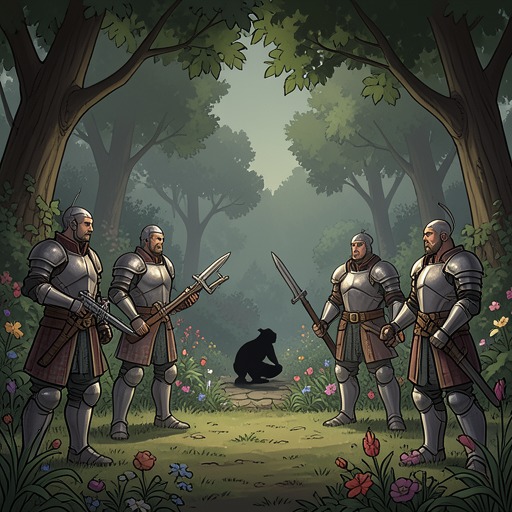
In the aftermath of battle, the defeated rebel angels lie scattered in the fires of Hell with their weapons and ensigns dispersed. Satan's command rouses them from their stupor. They rise in immense numbers, gather on the firm brimstone, and assemble before their commander. The scene transforms a broken army into a disciplined political body, preparing the way for the Infernal Council and for further opposition to Heaven. The fallen angels' loss of their former heavenly names also marks the severing of their old identity: their names are erased from the books of life, and only later, as they corrupt humankind, do they acquire the varied names by which the heathen world knows them.
Angels in Human History
The poem extends angelic agency beyond Heaven and Hell into the history of humanity. After the fall, the rebel spirits wander over Earth, permitted to test humankind, and corrupt people through falsehoods and lies. They persuade nations to abandon God, transform divine glory into the image of beasts, and worship devils as deities through religions marked by pomp, gold, and ritual display. The many names and idols of the heathen world are therefore presented as historical masks assumed by fallen angels after their celestial names have been erased.
Faithful angels also mediate divine presence among human beings. In the history revealed to Adam, God promises that his chosen nation will receive laws, rites, and a sanctuary in which he will dwell among mortals. The Tabernacle contains the Ark, the records of the covenant, the golden mercy-seat between Cherubim, and seven lamps representing heavenly fires. A cloud by day and a fiery gleam by night accompany the people on their journeys, while an angel leads them toward the land promised to Abraham and his seed. Angels thus stand between the invisible God and earthly communities, making divine government, protection, judgment, and worship perceptible within history.
Mediation, Judgment, and Thematic Significance
Angels repeatedly occupy the position of mediators between divine truth and human understanding. The Heavenly Quire is silent when God asks who will offer life for the mortal crime of humanity; no angel volunteers to bear the forfeiture or ransom. The Son alone offers himself as life for life, revealing the limit of angelic power and the uniqueness of his redemptive office. Angels can serve, praise, fight, guide, and announce, but they cannot provide the atonement that restores mankind.
Their relation to humanity is also marked by contrast. God creates Adam and Eve in his image and gives them dominion over the living world, while the angels remain the older celestial powers who witness and administer the divine order. After Adam's transgression, Michael shows him the effects of original crime, including the violent death of Abel at the hands of Cain. The angel interprets the scene rather than preventing it: death has entered human history, and angelic instruction turns vision into knowledge of consequence.
Angels therefore embody both the grandeur and the risk of created freedom. Their immense intelligence, beauty, hierarchy, and power do not make rebellion impossible; Satan and his followers demonstrate that even heavenly spirits may mistake equality for sovereignty and independence for self-creation. Yet Abdiel demonstrates the opposing possibility, standing alone amid hostile powers to affirm God's decree. Across creation, war, worship, revelation, and human history, Angels are the order through which the poem tests whether liberty can remain joined to reason, rightful rule, and faithful love.